
GaitAI · WalkScan
Turn a walking video into a clinician-ready movement report.
Analyzes a short walking video and turns it into gait and mobility metrics — ready as a downloadable PDF.
Walking speedCadenceStep / stride pattern+4 more
GaitAI exists for a future where AI doesn't only respond after something goes wrong, but quietly helps predict, prevent and protect — before it does.
From gait, balance and mobility change to rehabilitation progress and fall-risk insight — MobilityCare turns human-movement signals into clinically useful, actionable intelligence.
What MobilityCare does, in the words clinicians and care teams use for it — and which modules and environments each capability lives in.
Filter by environment, deploy what's relevant. Every product produces clinician-friendly outputs and exportable reports.
Analyzes a short walking video and turns it into gait and mobility metrics — ready as a downloadable PDF.
Uses gait, balance, variability, posture and longitudinal movement trends to sort elderly and at-risk patients into low / medium / high screening categories for clinician review.
Compares movement across therapy sessions to make rehabilitation progress visible and motivating for both clinician and patient.
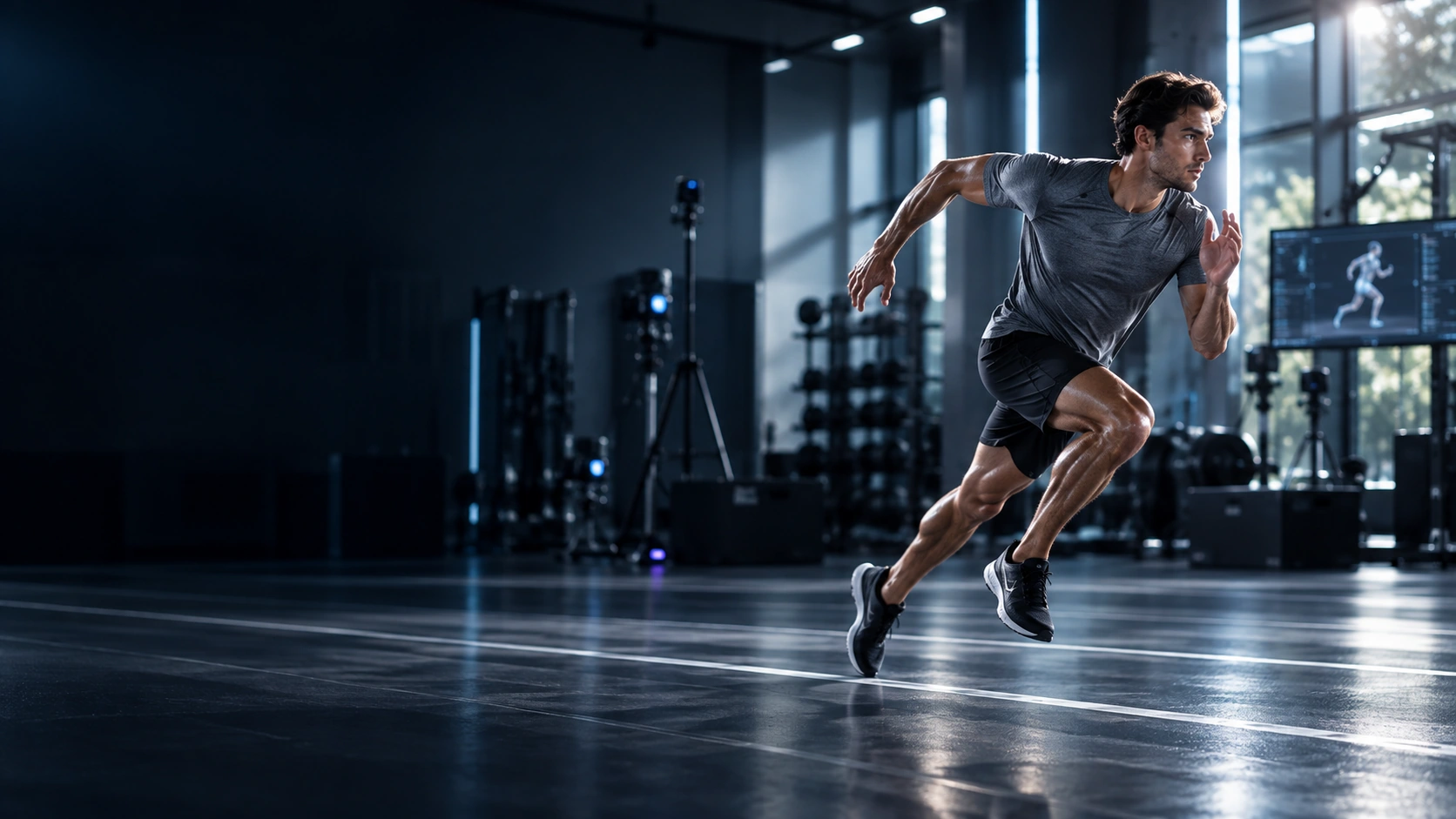
Analyzes walking and running mechanics to surface asymmetry, imbalance and fatigue-related change, supporting return-to-play review with longitudinal movement evidence.
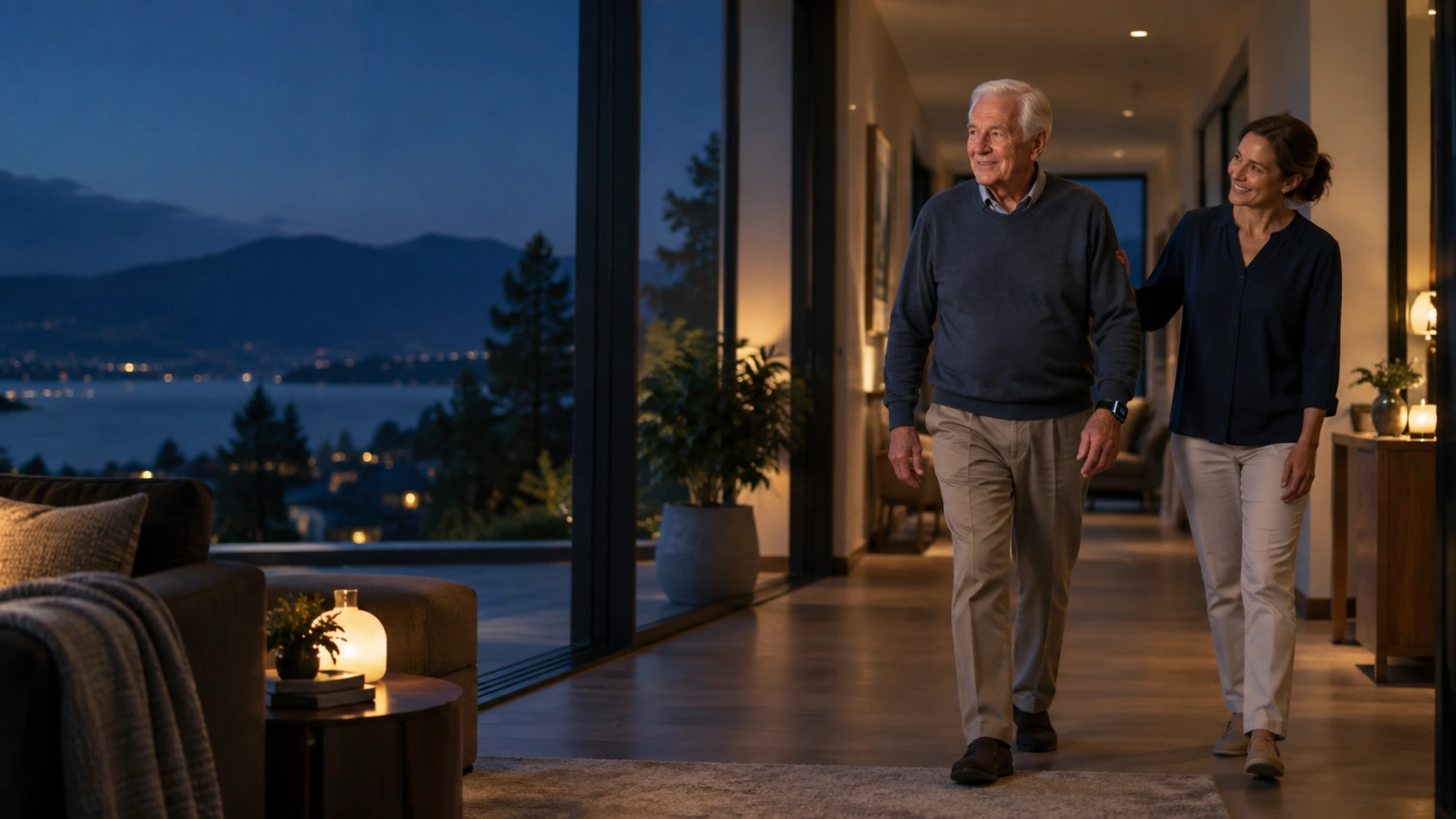
Combines smartwatch, mobile and wearable sensor data to estimate daily mobility and activity patterns, gait variability and longitudinal fall-risk indicators for clinician, caregiver or remote-care review.
Supports ongoing monitoring of gait patterns linked to neurological movement difficulties, including freezing, shuffling and turning instability.
Evaluates gait changes related to joint, bone, muscle, foot, spine and post-surgical conditions.
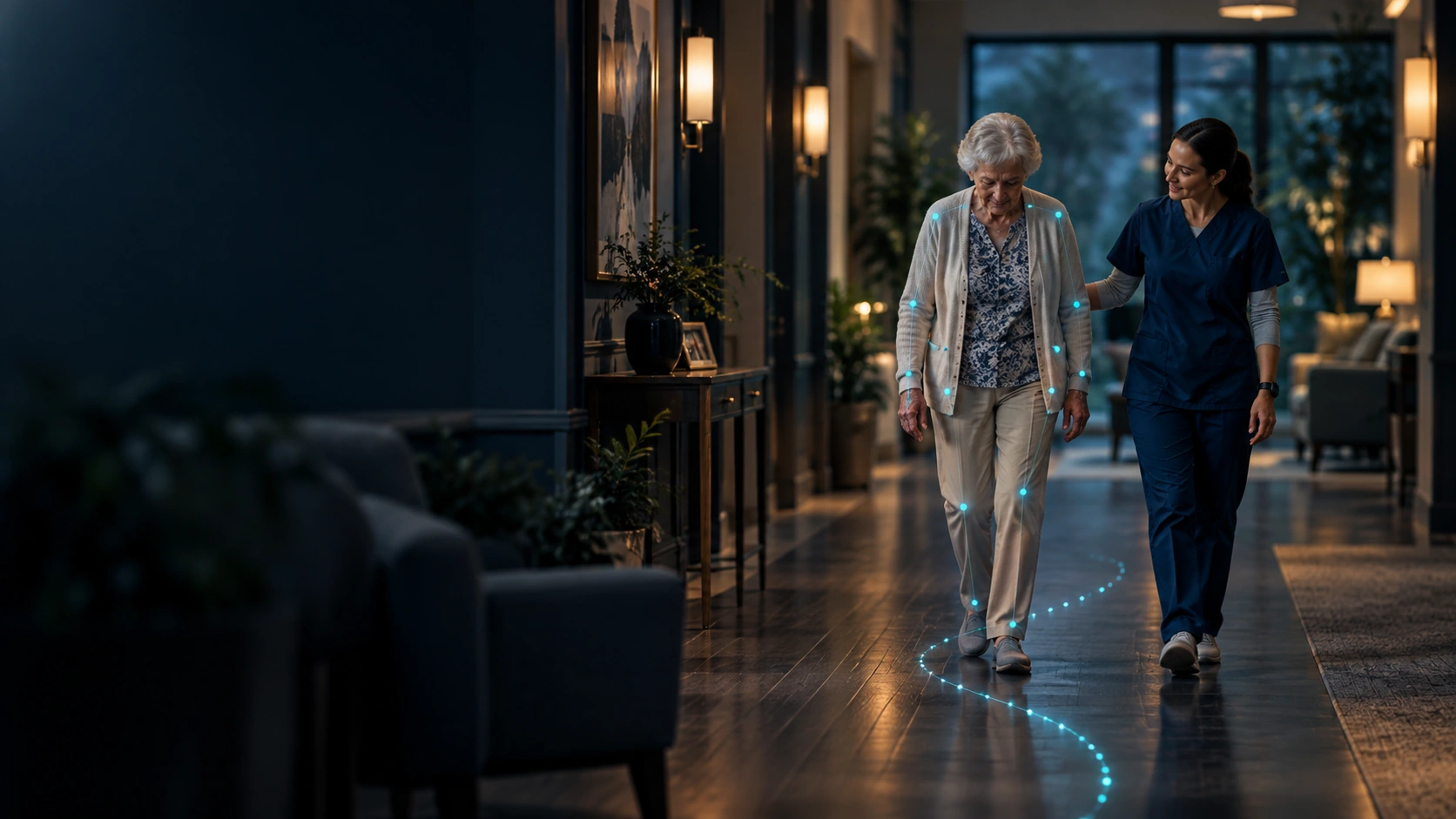
Runs periodic mobility assessments for senior citizens and surfaces longitudinal mobility changes and decline indicators for caregiver or clinician review.
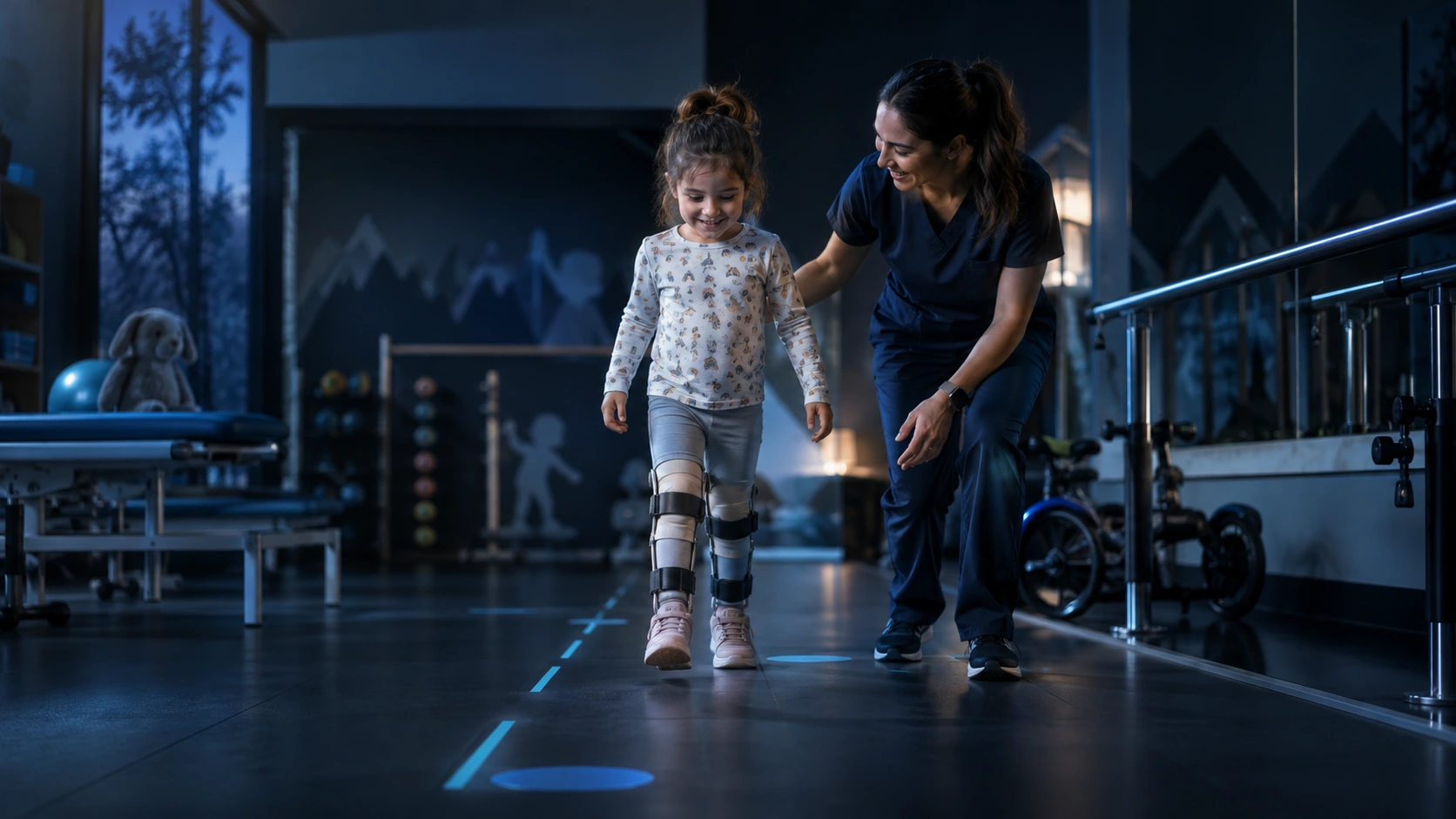
Assists with child gait observation and longitudinal monitoring for developmental or orthopedic concerns including CP and toe-walking.
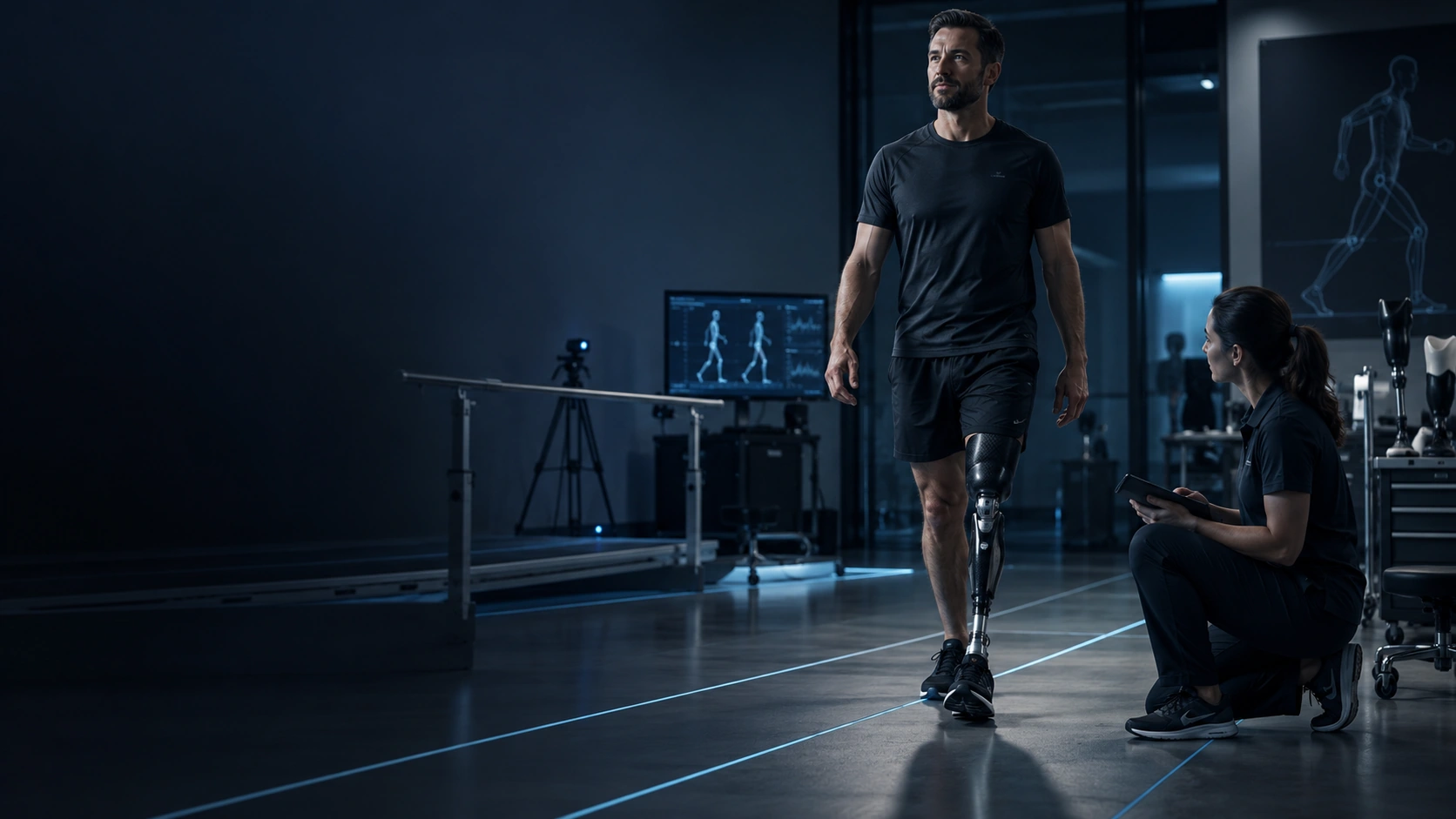
Quantifies movement changes associated with prosthetic or orthotic use — symmetry, cadence, gait timing, posture and loading proxies, compared before and after a fitting change.
Patients upload guided walking videos from home; clinicians receive AI-generated progress reports and review them on a unified dashboard.
Provides measurable gait and movement outputs for research studies, trials and device-evaluation workflows.
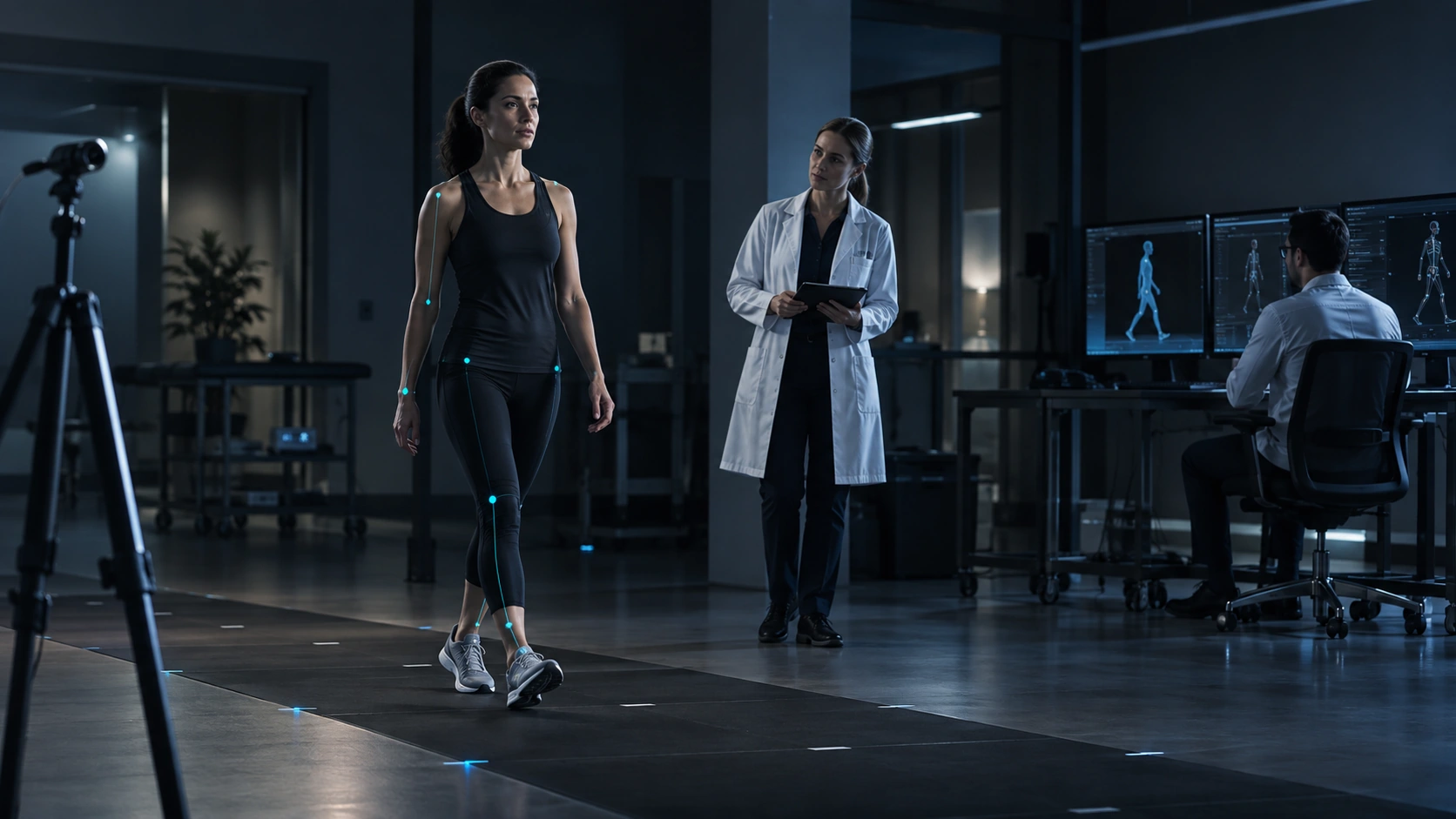
WalkScan converts a short walking video into structured gait and mobility measurements. It is designed to give clinicians and movement professionals a measured layer of evidence alongside visual observation.
Explore the MobilityCare app
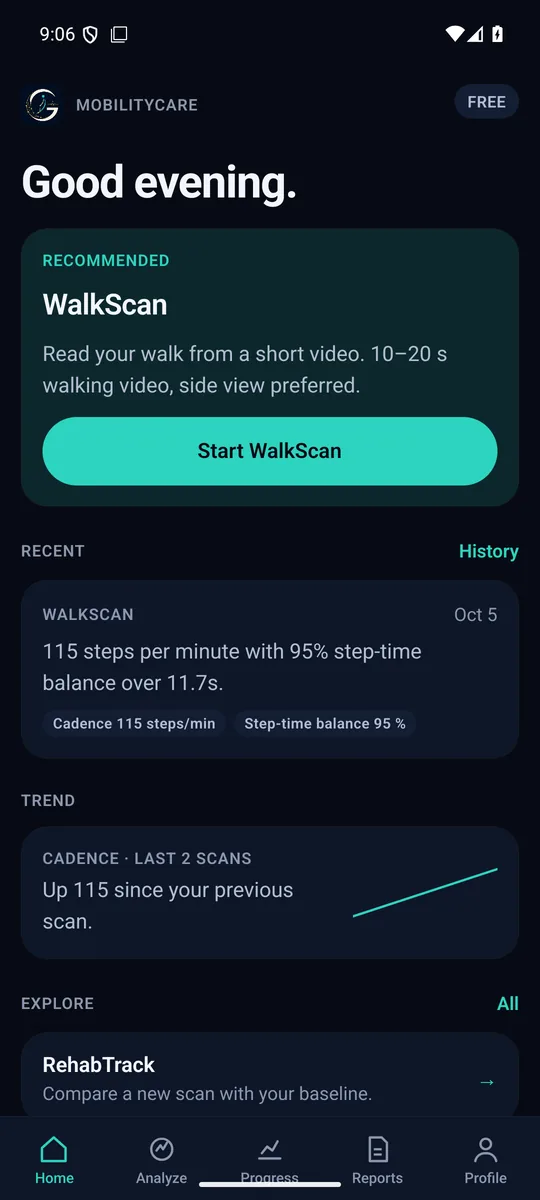
GaitAI MobilityCare is a native Android app. Record or upload a 10–20 second walking video and it returns cadence and step-time balance in minutes, with every frame analysed on the device. These are the app's real screens, running on Android.
Free download. An active subscription is required to use the application's features. Plans and payment options are available inside the app.
Try the Movement Lab on the webA browser demonstration of pose tracking on this site — not the app.
1 of 9 · HomeWalkScan is recommended first. Your most recent scan and the cadence trend across your last scans sit underneath.
Coming soon, visible but not startable: Balance (still-standing sway) · SportsMotion.
Version 0.2.0 (build 3) is a public release, free to download and signed with the GaitAI release key. Sign in with a GaitAI account inside the app; analysis, history and reports unlock with an active subscription, chosen and paid for in the app.
Version 0.2.0 (build 3) · Android 7.0 or later · free download.
All values are two-dimensional estimates from a single camera. They are movement indicators, not a diagnosis; the app computes nothing that needs distance, such as stride length or walking speed.
Five illustrative walking moments. Switch from recorded input to its estimated keypoints and an explanation of the same source.
Switch the view
Illustrative demo · Example values
WatchCare uses smartwatch, phone and compatible wearable signals to track everyday movement between formal assessments.
A trendline of walking rhythm, activity and mobility consistency — every day.
Flags unusual reductions in activity or walking confidence over time.
Tracks gradual gait changes associated with elevated fall risk.
Estimates daily mobility and activity patterns during recovery for clinician and caregiver review.
Tracks return-to-activity and symmetry trend after a sports injury.
A simple mobile + web dashboard for family and care teams.
FallRisk combines gait, balance, movement variability, posture and longitudinal change into an interpretable mobility-risk profile.
Categories are screening support for care teams, alongside the contributing signals — not a diagnosis or a prediction of an individual event. How FallRisk works.
Scrub five illustrative sessions and watch the readings change. Nothing here is measured — the point is the shape a repeated record has, and what a single assessment cannot show.
82%
Left/right agreement on step timing. Higher is more even.
96 steps/min
Steps per minute at a self-selected pace.
14%
How much step-to-step timing changes within one walk. Lower is steadier.
No trajectory yet
A trajectory needs at least two comparable captures.
The first capture. On its own it establishes a reference and says nothing about direction — there is nothing yet to compare it with.
Captures each session — one walking video becomes one set of readings.
Aligns repeated sessions into a single record and computes the change between them.
Reads the trend against the person's own baseline rather than against a population.
Fills the weeks between sessions with wearable-derived activity, where a camera is not present.
Five illustrative sessions with invented readings, shown to demonstrate what a longitudinal record looks like. No assessment, study or patient record is involved, and nothing here is a clinical measure.
GaitAI Care is a digital health record management platform designed to help individuals, parents, and families securely organize their medical history, track treatments, manage medications, and understand medical reports with AI-assisted insights.
Upload PDFs and photos. Text is read on GaitAI's own servers and becomes history only after you check it against the original.
Courses as written, what was actually taken, and reminders you confirm yourself.
Admissions, discharge summaries, vaccination cards and next doses, on one timeline.
Yourself, your children, your parents: separate profiles, with read-only access you can grant and revoke.
GaitAI Care organises records. It is not a medical device and does not diagnose, prescribe or recommend treatment; your clinicians make medical decisions.
From physiotherapy clinics to neurology wards, sports academies to elderly-care homes — each environment has a different problem, a different product mix and a different output.
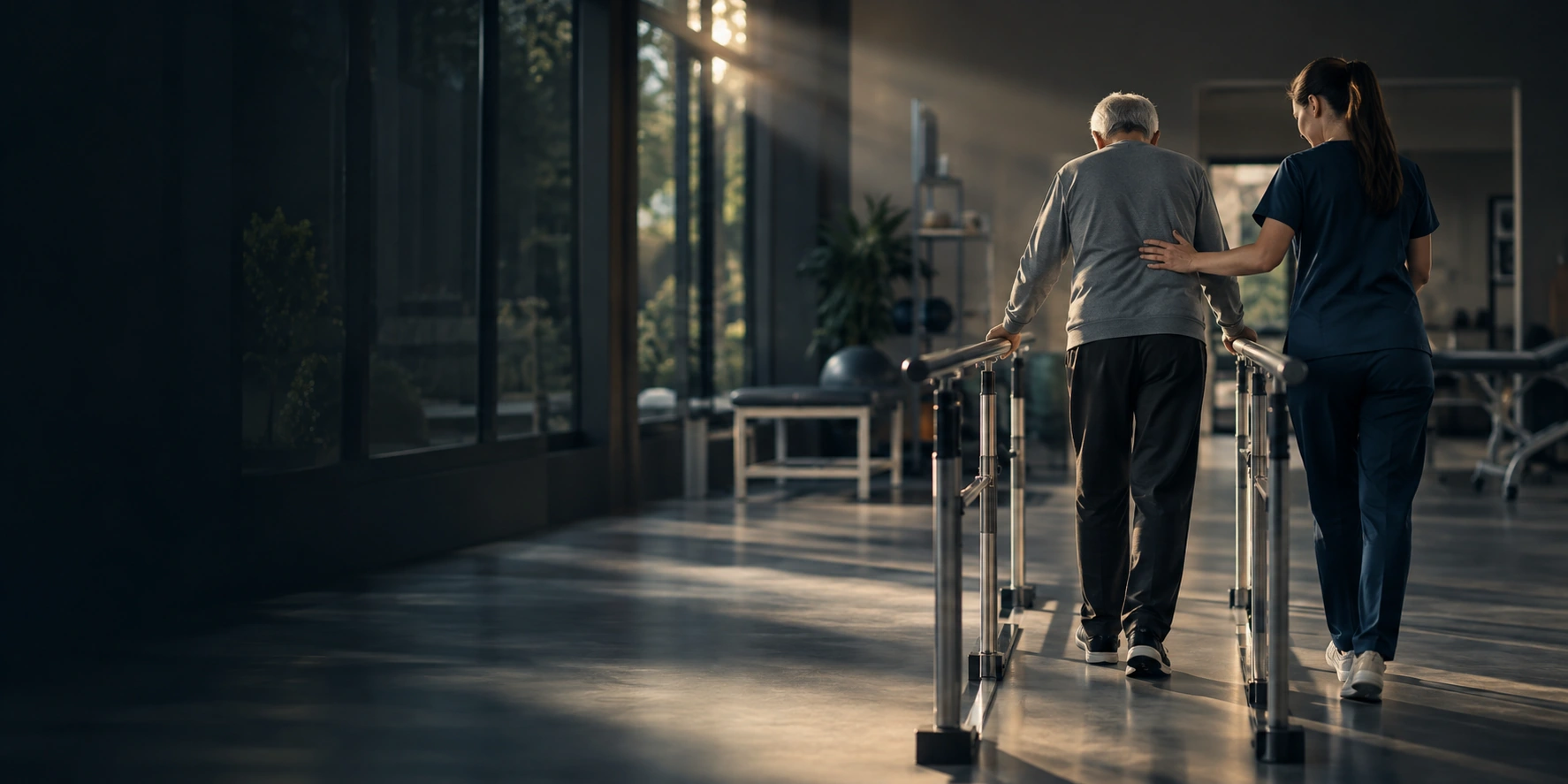
Therapists need objective evidence that therapy is working — beyond subjective observation.
Ward fall-risk and post-surgery recovery often rely on manual assessment that doesn't scale.
Injury-risk screening and return-to-play review are inconsistent without measurable movement data.
Monthly screenings can miss gradual mobility changes associated with elevated fall risk.
Subtle changes in Parkinsonian, post-stroke and ataxic gait are hard to quantify in-clinic.
Between visits, remote patients are hard to follow — and mobility decline can go unnoticed.
Fitness and wellness centers are looking for a screening layer that turns movement quality into a member benefit.
Children's developmental movement and sports injury-risk screening is rarely measured early.
Movement response to a fitting change is often judged by observation, with symmetry and loading data missing from the loop.
Preventive-health programs need ongoing mobility intelligence — not annual screenings.
Pharma and CROs need objective, exportable movement endpoints across study cohorts.