Smart cities
Public-space intelligence that respects the public.
For smart-city environments, GaitAI can pair CrowdSense aggregate public-space analytics with ForensicSearch post-event investigation, governed end-to-end by PrivacyGuard.
The operational problem
Public spaces need crowd intelligence designed for real-time operational workflows, with privacy respected by default.
Why current workflows fall short
Cities need crowd-risk awareness and workable post-event investigation, but public deployments cannot be built on unrestricted identifiable video.
Recommended GaitAI product mix

See crowd flow, bottlenecks and density-risk indicators.
Analyzes crowd movement, density, queues, bottlenecks, flow direction and abnormal crowd-motion indicators for smart-city scale public spaces.
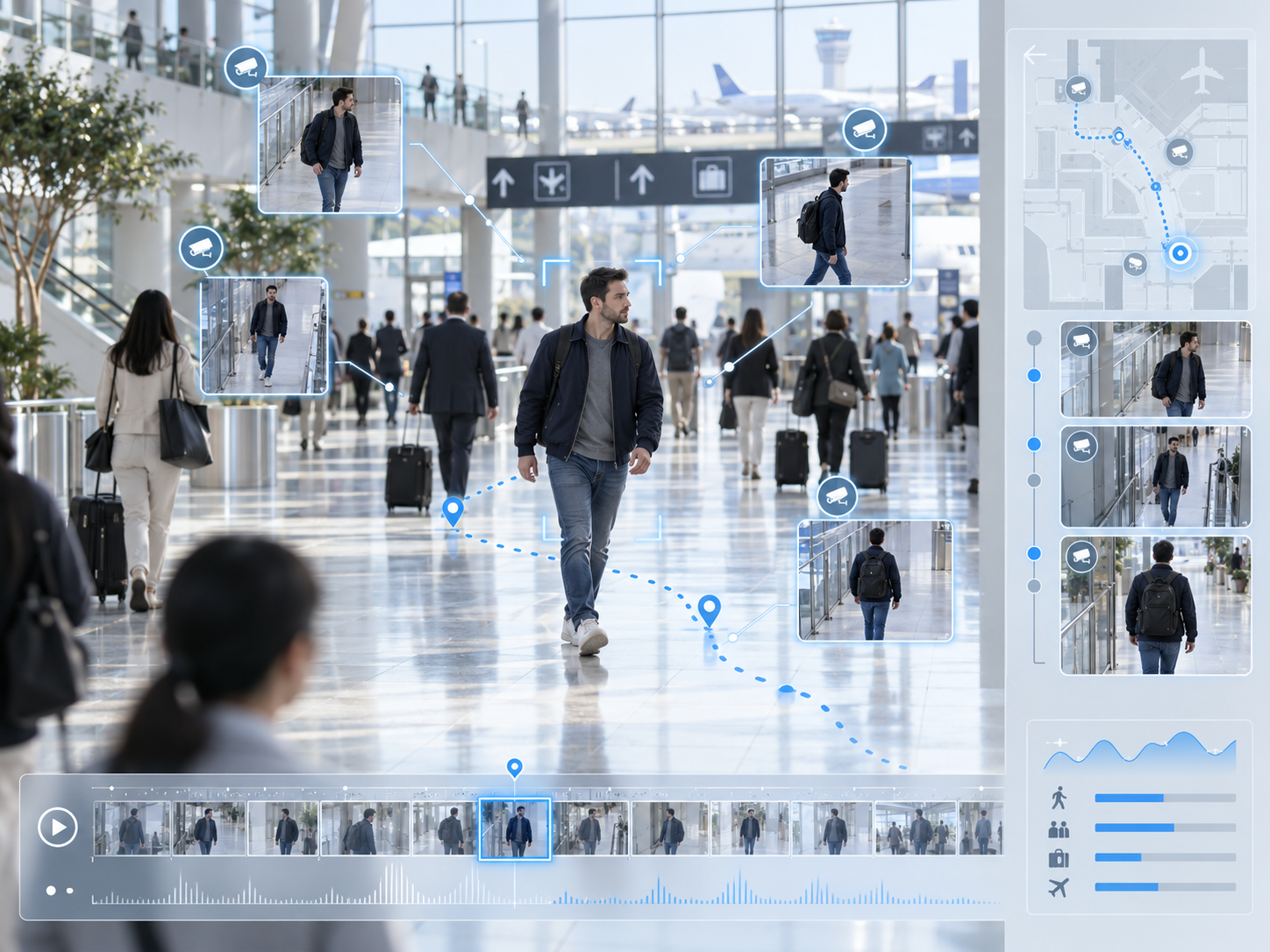
Search recorded CCTV by movement, timeline and event path.
Searches uploaded CCTV footage for a person, movement pattern, timeline, or event path after an incident.

Movement intelligence — with task-relevant movement representations.
The architectural privacy layer for GaitAI: designed to support skeleton-only analytics, face blur, role-based access, configurable retention and audit logs in privacy-sensitive environments.
Example workflow
- 01Public zones configured with civic oversight
- 02Aggregate flow and density feed city operations
- 03Crowd-risk alerts support event and transit planning
- 04Post-event investigations run case-scoped and audited
- 05Privacy reports support governance review
Expected operational outputs
Crowd-risk insight, privacy-aware (aggregated) spatial analytics and audited post-event investigation.
Privacy & responsible use
Designed to support consent-based capture, encrypted transfer, configurable retention and role-based access, with activity logging and skeleton-only processing modes. Deployment requirements depend on the applicable environment, organization and jurisdiction. Privacy-aware architecture does not automatically mean anonymity: pose, gait and trajectories may still carry identifying information. Movement analytics are designed to run without identifying individuals unless a deployment lawfully and explicitly requires it, and identity-related capabilities are intended only for lawful, authorized deployments with appropriate governance, access control and auditability. Outputs are decision support for trained operators — not autonomous enforcement.