Prosthetic & orthotic clinics
Every fitting change, measured in the walk.
For prosthetic and orthotic clinics, GaitAI can use ProstheticFit to compare device configurations and WalkScan for standard gait assessment across the fitting journey.
The operational problem
Movement response to a fitting change is often judged by observation, with symmetry and loading data missing from the loop.
Why current workflows fall short
Device fit is judged largely by comfort report and visual check; symmetry and loading changes between configurations stay invisible to the fitting decision.
Recommended GaitAI product mix
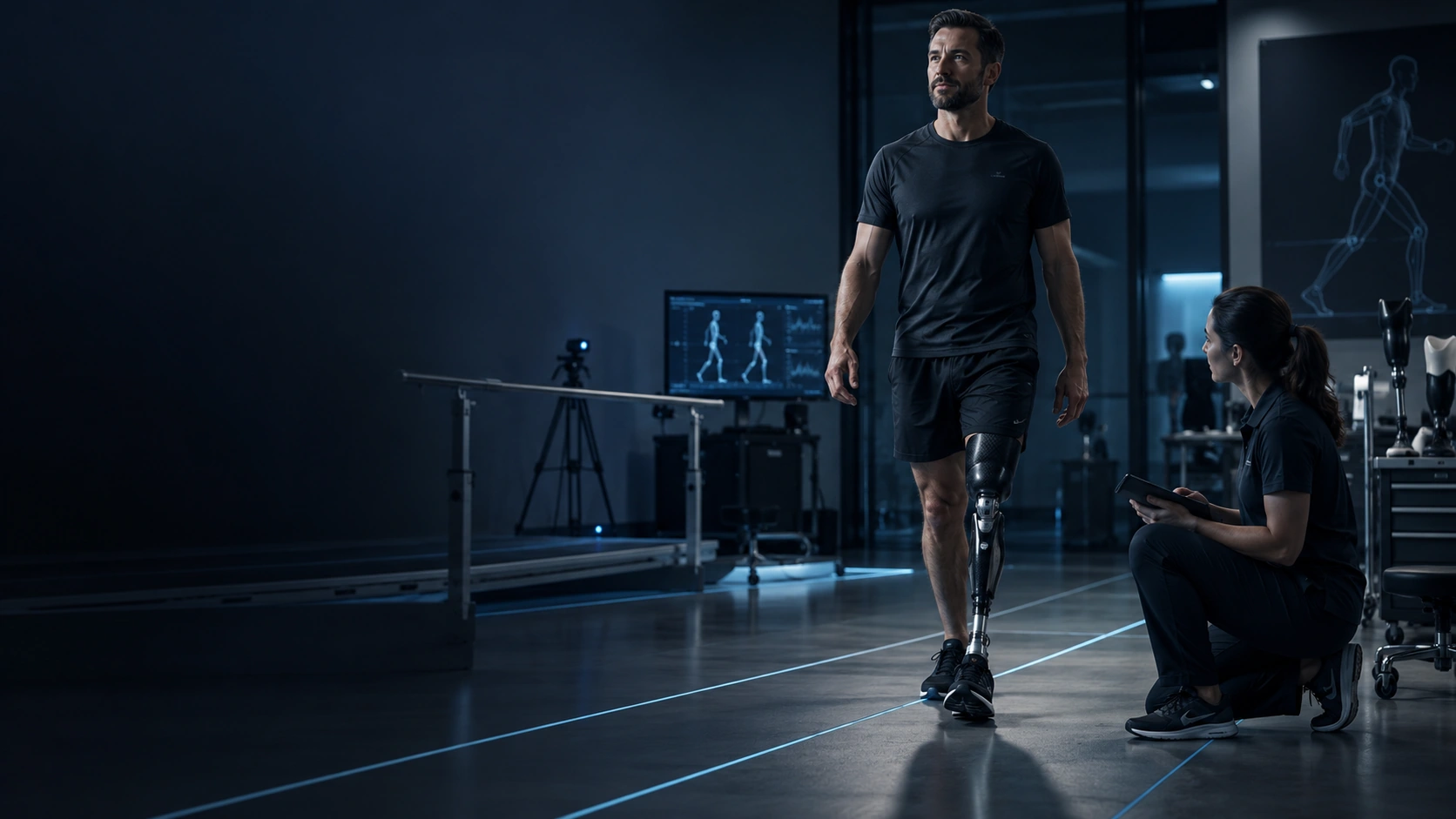
How well does the device walk?
Quantifies movement changes associated with prosthetic or orthotic use — symmetry, cadence, gait timing, posture and loading proxies, compared before and after a fitting change.

Turn a walking video into a clinician-ready movement report.
Analyzes a short walking video and turns it into gait and mobility metrics — ready as a downloadable PDF.
Example workflow
- 01Baseline walk before adjustment
- 02Device configuration is changed
- 03Repeat walk under the new configuration
- 04Paired comparison reviewed with the patient
- 05Longitudinal record tracks the fitting journey
Expected operational outputs
Assistive-device comparison, walking symmetry and longitudinal mobility assessment.
Privacy & responsible use
Designed to support consent-based capture, encrypted transfer, configurable retention and role-based access, with activity logging and skeleton-only processing modes. Deployment requirements depend on the applicable environment, organization and jurisdiction. Privacy-aware architecture does not automatically mean anonymity: pose, gait and trajectories may still carry identifying information. GaitAI outputs are AI-generated movement metrics intended as decision support — they do not diagnose medical conditions and do not replace clinical judgement.