Hospitals
Mobility evidence from admission to discharge.
For hospital environments, GaitAI can combine FallRisk for ward mobility-risk screening, NeuroMotion for neurological gait monitoring and OrthoMotion for post-surgical recovery — one movement layer across departments.
The operational problem
Ward fall-risk and post-surgery recovery often rely on manual assessment that doesn't scale.
Why current workflows fall short
Manual mobility assessment doesn't scale across wards, and subtle decline between scheduled checks can surface only as an incident.
Recommended GaitAI product mix
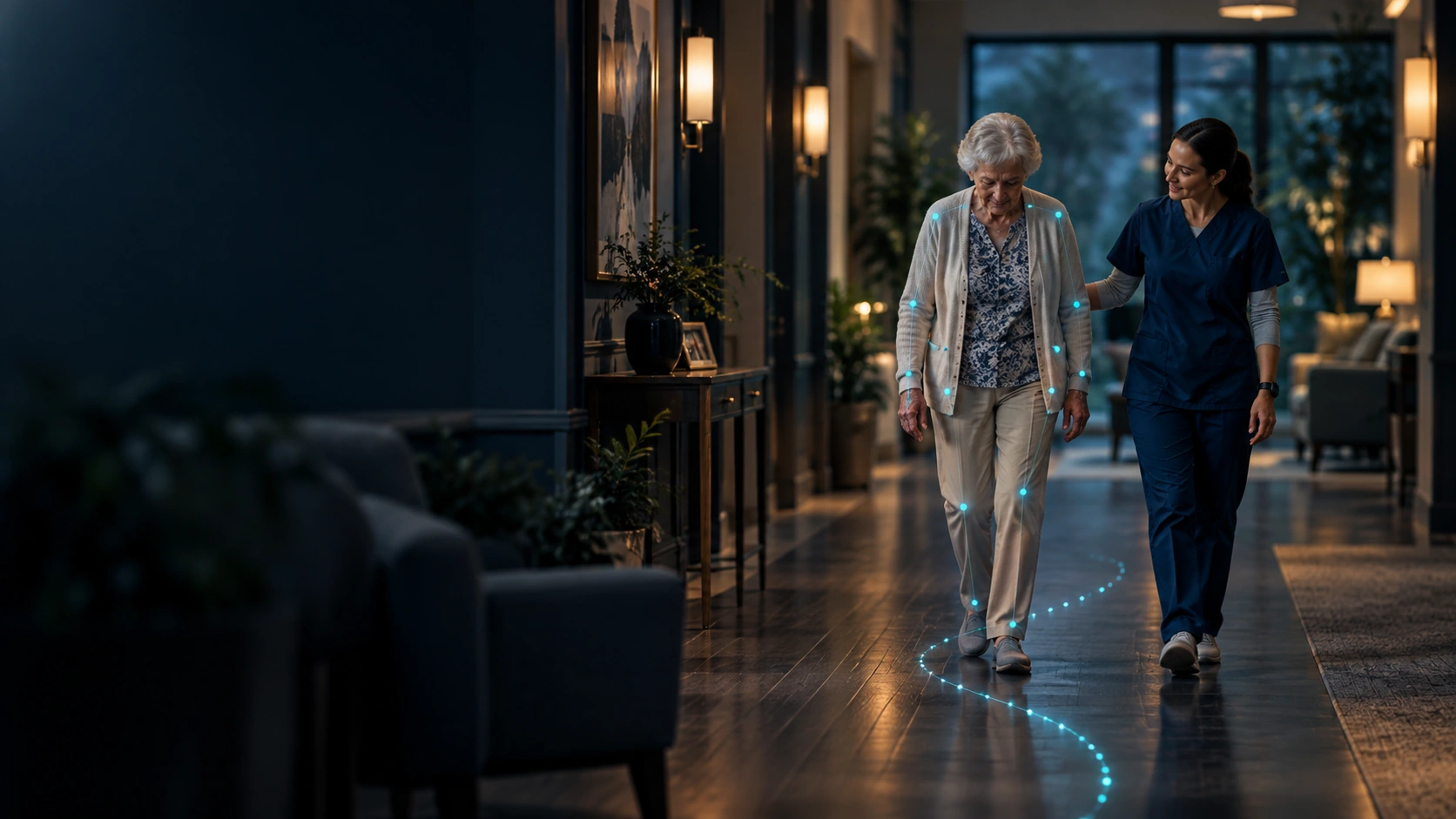
Surface mobility decline and fall-risk indicators early.
Uses gait, balance, variability, posture and longitudinal movement trends to sort elderly and at-risk patients into low / medium / high screening categories for clinician review.
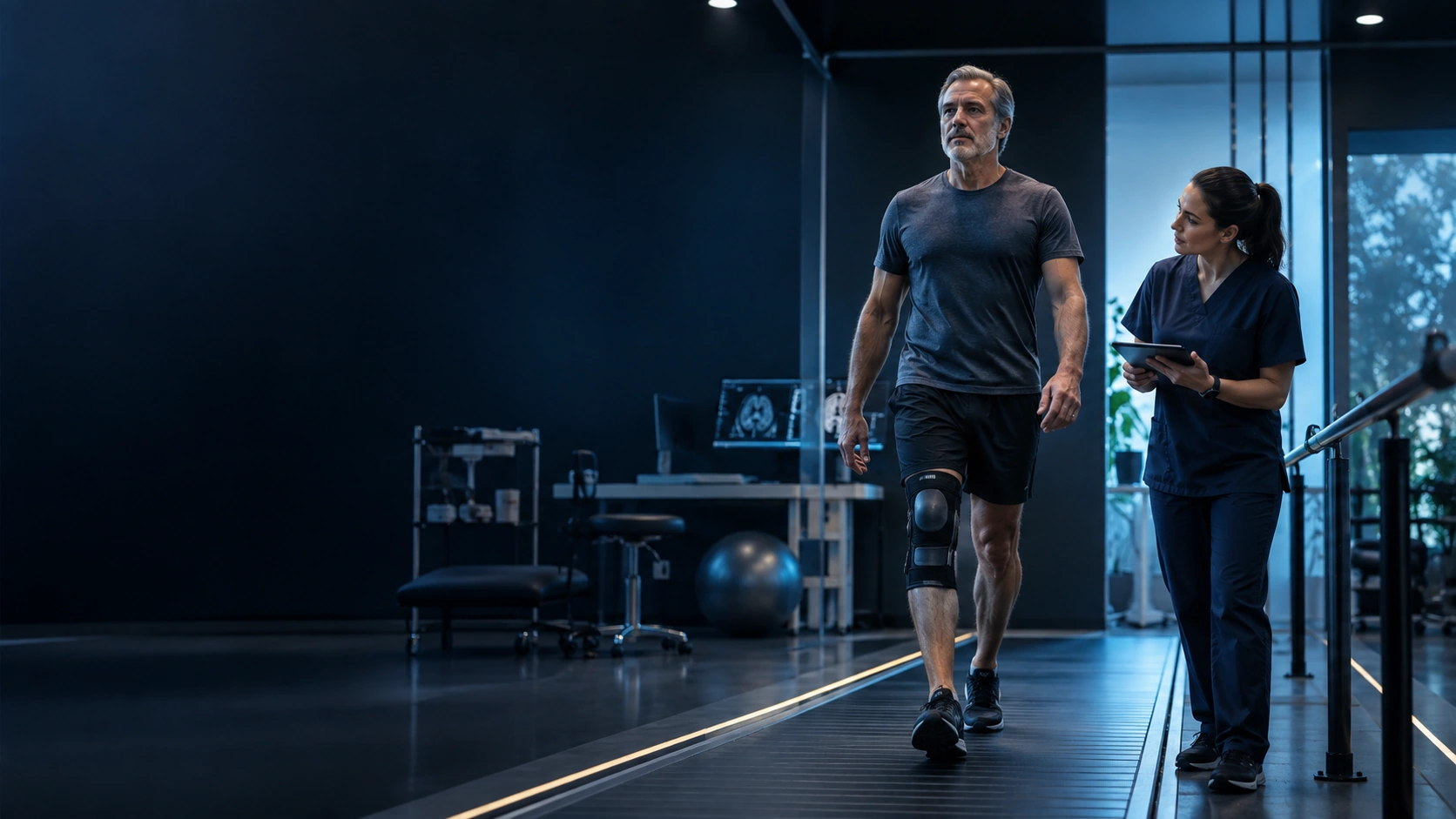
Monitor Parkinsonian, stroke, ataxia & MS gait patterns.
Supports ongoing monitoring of gait patterns linked to neurological movement difficulties, including freezing, shuffling and turning instability.
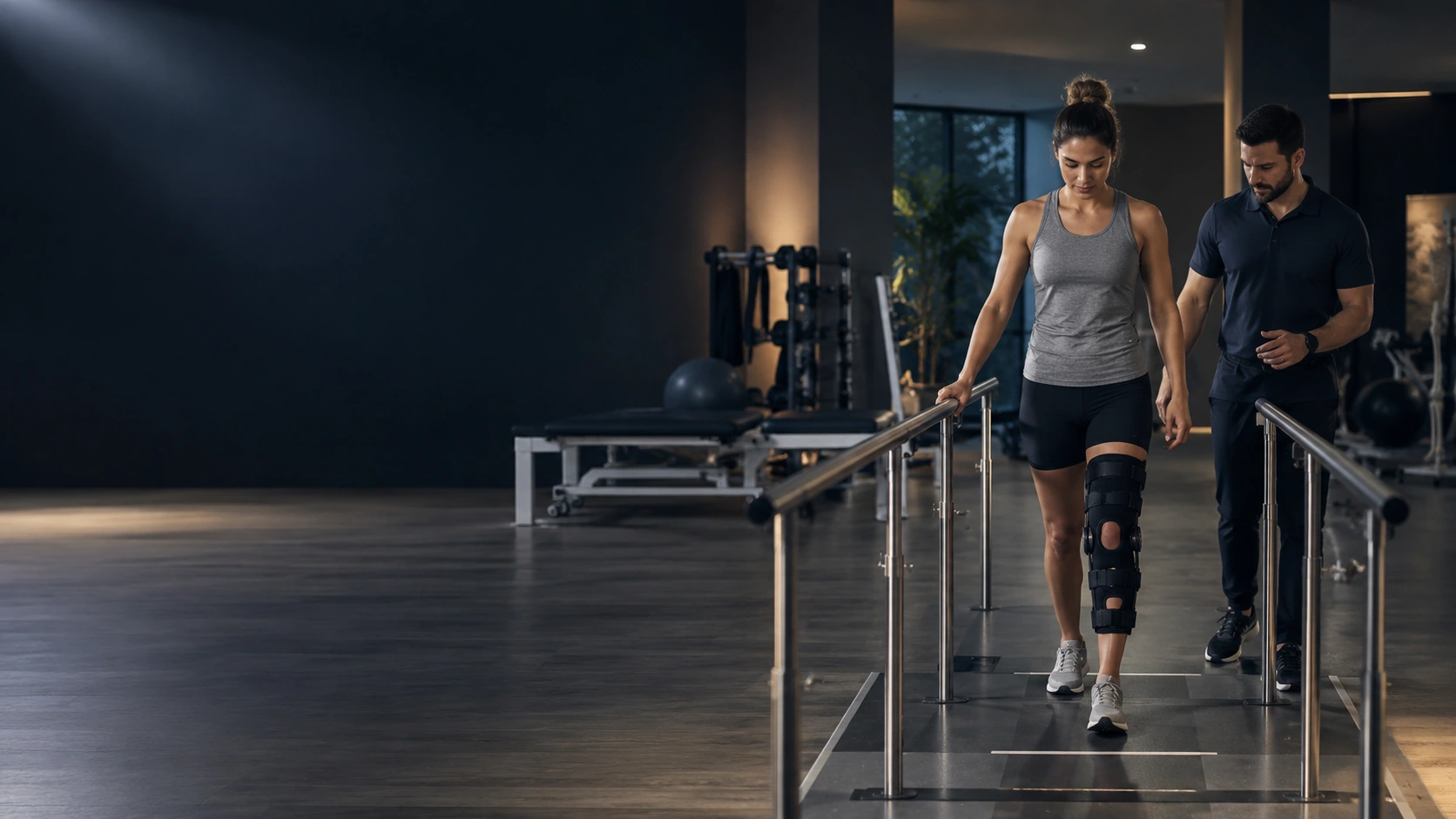
Joint, limb, posture & post-surgical mobility — measured.
Evaluates gait changes related to joint, bone, muscle, foot, spine and post-surgical conditions.
Example workflow
- 01Admission mobility assessment establishes a baseline
- 02Ward reassessments run on a schedule or after events
- 03FallRisk categories prioritise mobility support
- 04Specialty teams review NeuroMotion / OrthoMotion trends
- 05Discharge planning uses the measured recovery record
Expected operational outputs
Mobility assessment, ward fall-risk support, post-surgical recovery and discharge-planning evidence.
Privacy & responsible use
Designed to support consent-based capture, encrypted transfer, configurable retention and role-based access, with activity logging and skeleton-only processing modes. Deployment requirements depend on the applicable environment, organization and jurisdiction. Privacy-aware architecture does not automatically mean anonymity: pose, gait and trajectories may still carry identifying information. GaitAI outputs are AI-generated movement metrics intended as decision support — they do not diagnose medical conditions and do not replace clinical judgement.